




Playground Safety Flooring UK — BS EN 1177 Certified Rubber Tiles & Matting
Playground safety flooring is a legal and moral requirement, not an optional upgrade. In the UK, any surfacing installed beneath or around play equipment where a child could fall must meet BS EN 1177 — the British and European standard for impact-attenuating surfaces in children's play areas. Schools, local authorities, nurseries, and commercial play facilities have a clear duty of care, and non-compliant or untested surfacing creates significant liability exposure in the event of a fall injury.
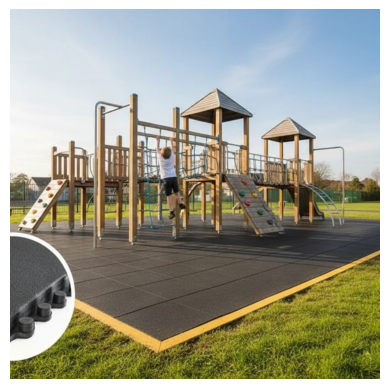
Our playground safety flooring range includes BS EN 1177 certified rubber tiles in 25mm, 40mm, and 50mm thicknesses, delivering Critical Fall Heights from 1.5m to over 3m. All products are independently tested by UKAS-accredited laboratories and supplied with full test documentation to support compliance records. The range covers the complete procurement requirement for schools, parks, leisure centres, nurseries, and early years settings.
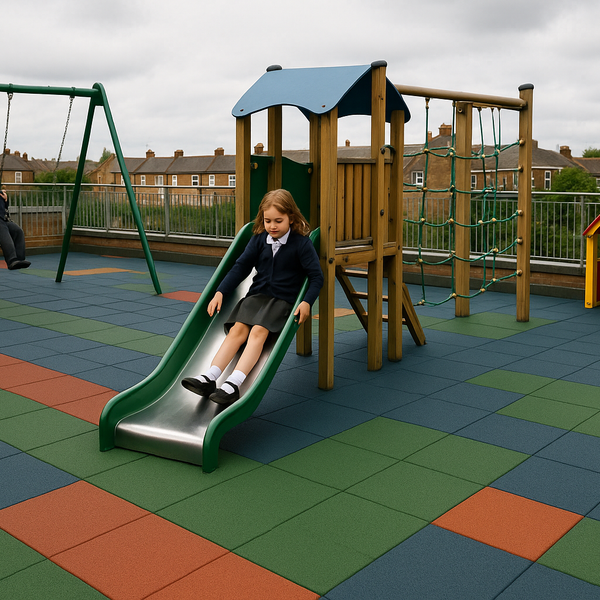
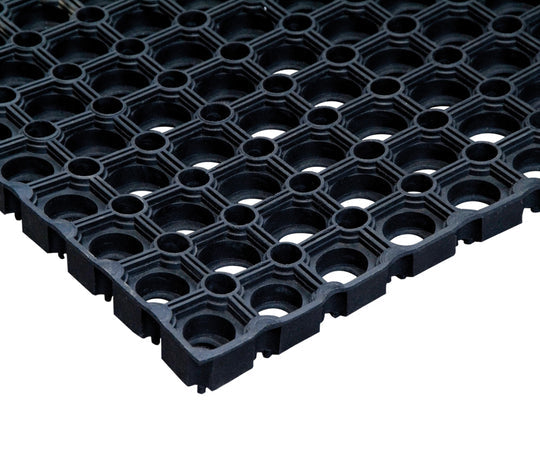
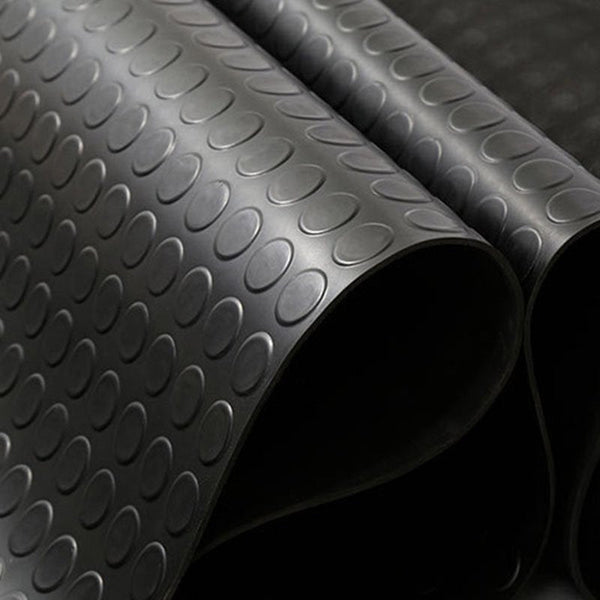
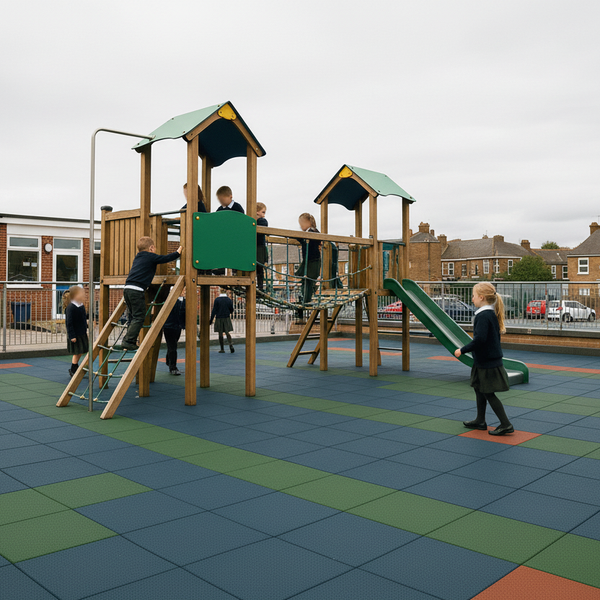
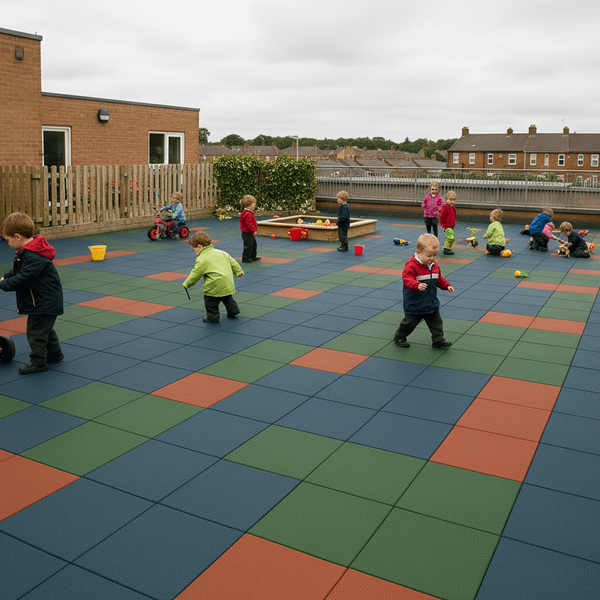
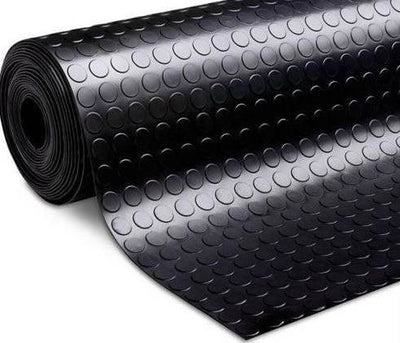
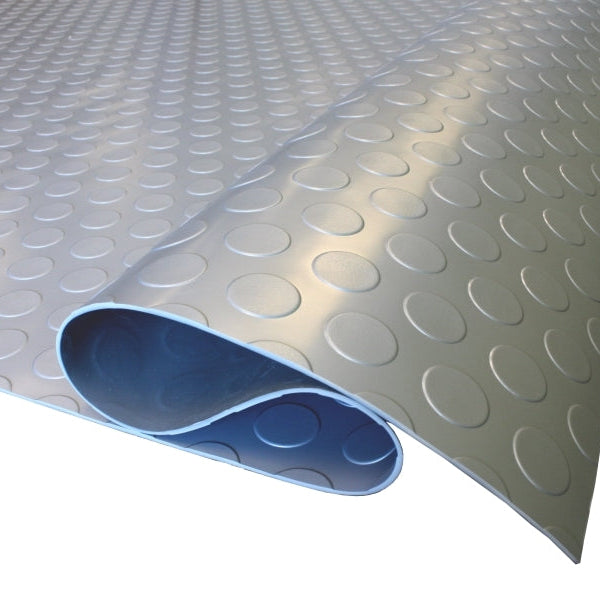
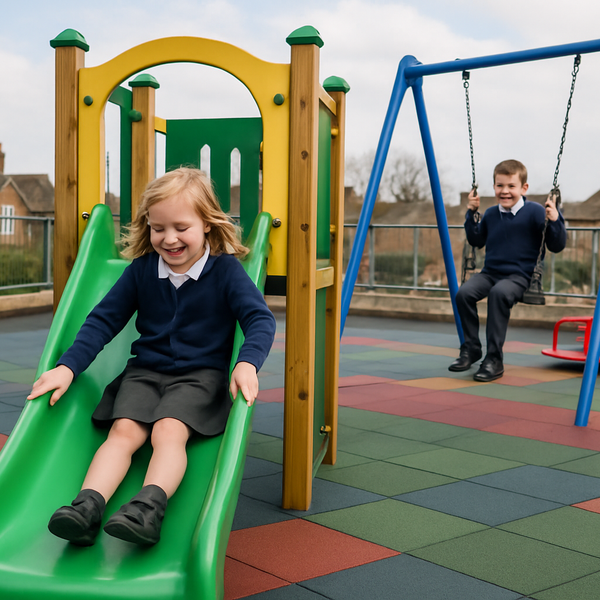
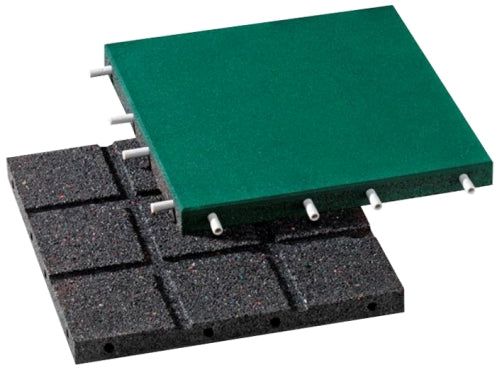
Rubber playground tiles are manufactured from SBR recycled rubber (from post-consumer tyre crumb) with a coloured EPDM wearing layer. The two-layer construction provides both impact performance from the SBR base and weather-resistant, UV-stable aesthetics from the EPDM surface. Colour options typically include black (standard), red, green, blue, and multi-colour for zoning and design schemes.
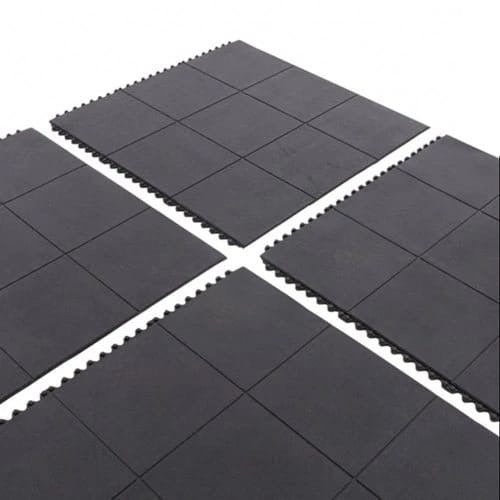
Standard tile formats are 500mm x 500mm and 1000mm x 1000mm, with interlocking edge profiles for installation without adhesive on compacted sub-bases. Ramp edge tiles and step tiles are available to create safe transitions at the perimeter of the safety zone. For complex shapes and areas requiring seamless coverage, bonded rubber crumb (poured-in-place) systems are available — contact us for site survey and quotation.
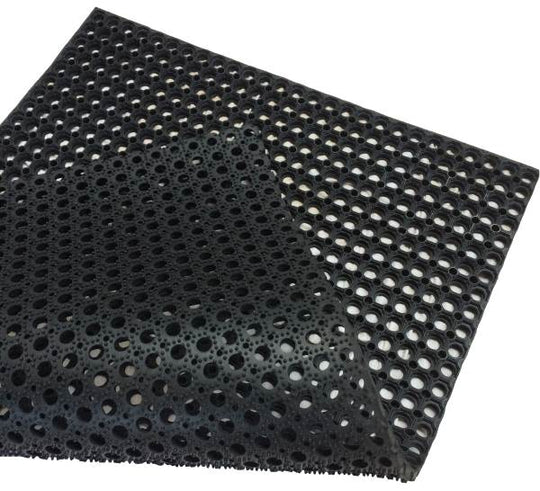
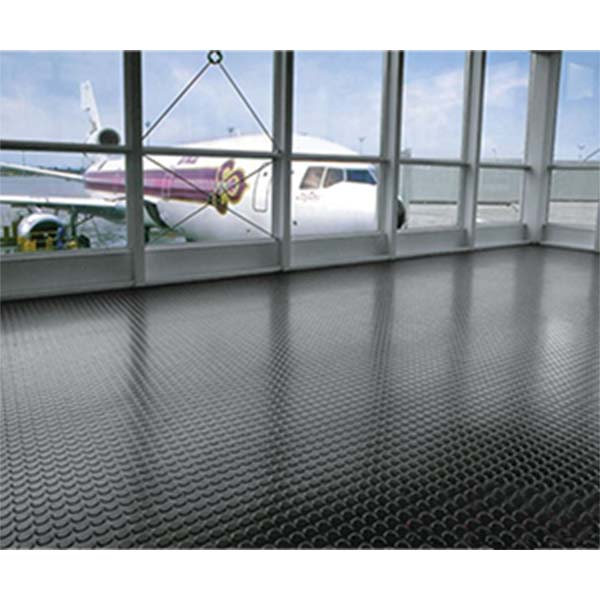
Playground safety flooring is also used beyond the equipment fall zone: as a general playground hard surfacing, on MUGA court surrounds, at swimming pool entries, and as a transition between grass and hard surfaces in school grounds. For non-equipment-fall applications, our 17mm–25mm recreational rubber tiles provide excellent durability and slip resistance without the higher cost of full-specification BS EN 1177 crash-rated product.
| Tile Thickness | Typical CFH (BS EN 1177) | Application |
|---|---|---|
| 25mm | ~1.5m–2.0m | Low-level play equipment, toddler areas |
| 40mm | ~2.0m–2.5m | Standard climbing frames, junior equipment |
| 50mm | ~2.5m–3.0m | Large climbing structures, aerial runways |
| Poured rubber | Up to 3.0m+ | Bespoke/inclusive designs, seamless coverage |
Related: Rubber Grass Mats for grass reinforcement in school grounds, Outdoor Garden Matting for weatherproof garden and leisure surfaces, and Rubber Flooring for our broader flooring range.
Do I need planning permission to install playground safety surfacing?
For surface replacement within an existing playground footprint in a school or public park, planning permission is generally not required. New playground installations or significant extensions to existing play areas may require planning consent depending on location (particularly within conservation areas or school grounds in the green belt). Contact your local planning authority for guidance specific to your site and project scope.
Can playground rubber tiles be recycled at end of life?
Yes. SBR rubber playground tiles are themselves made from recycled tyre rubber and are recyclable at end of life through specialist rubber recycling facilities. This circular material chain is a key sustainability advantage over wet-pour systems, which are more difficult to remove and recycle. Some suppliers operate take-back schemes for worn playground tiles — contact us for current recycling options.