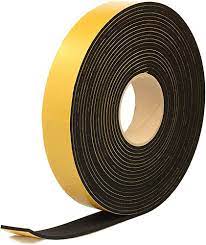
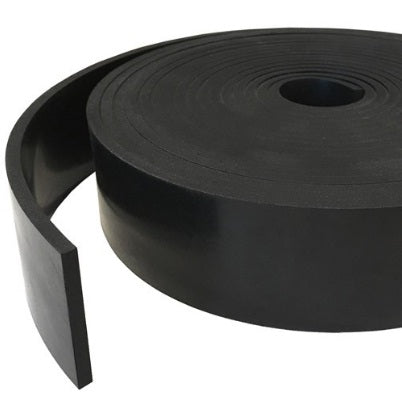
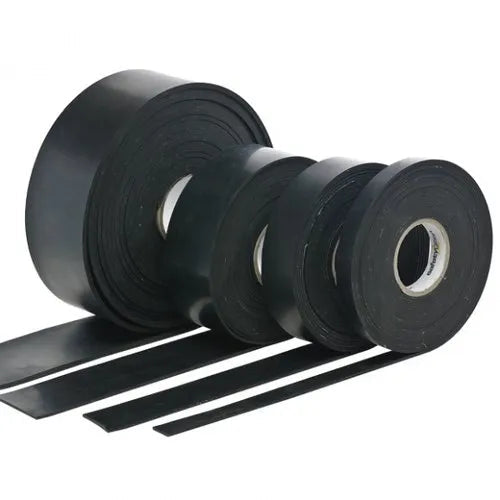
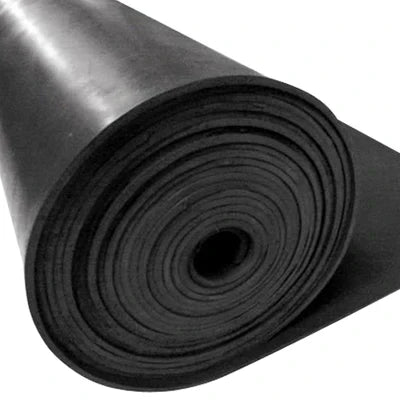
What is Rubber Matting?
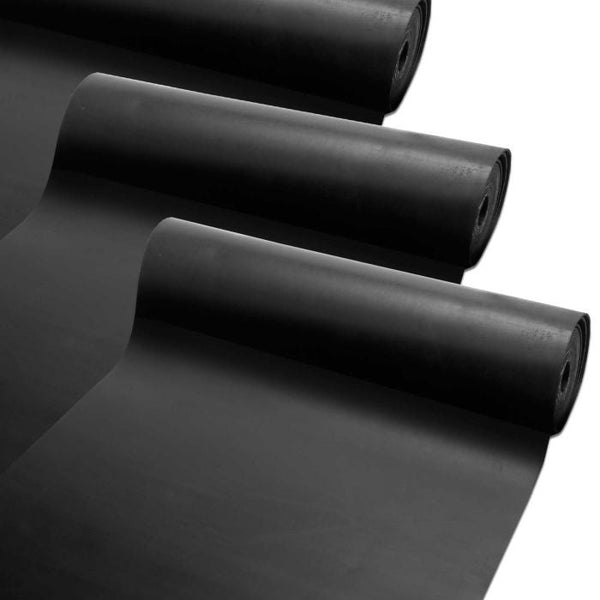
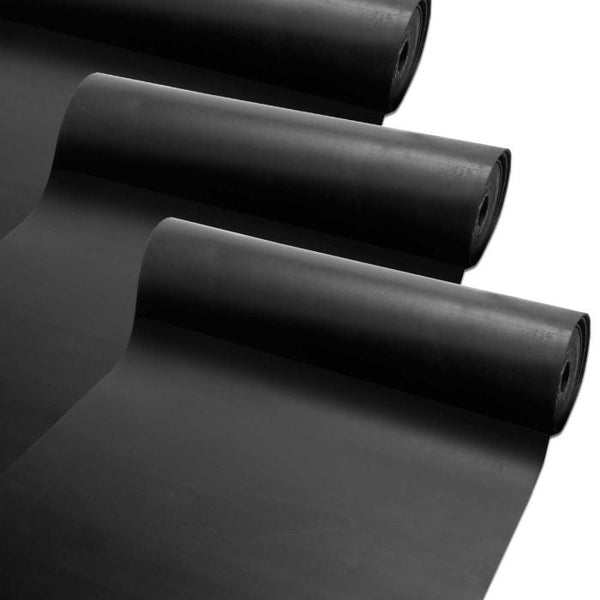
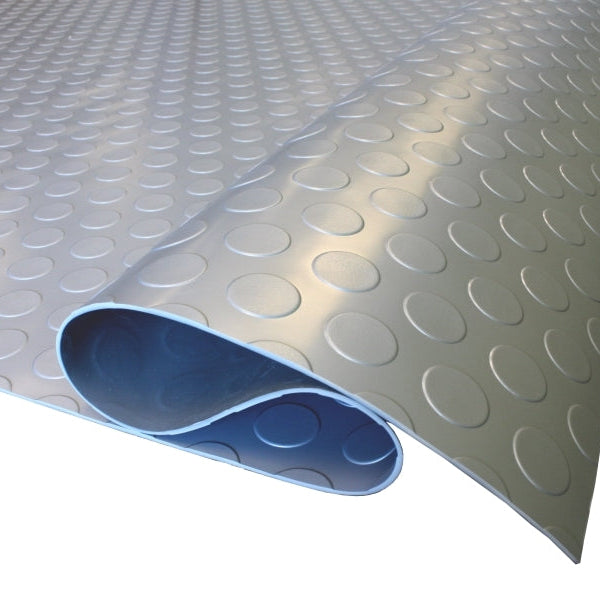
Rubber matting is a surface covering manufactured from vulcanised rubber compounds — either natural or synthetic — designed to provide slip resistance, impact absorption, anti-fatigue properties, and floor protection across industrial, commercial, and domestic environments. It is one of the most versatile flooring solutions available in the UK, used in settings as diverse as NHS hospital corridors and Olympic weightlifting platforms.
The term "rubber matting" covers a broad family of products: rolls, tiles, sheets, modular interlocking panels, and individual mats. What unites them is the base material — vulcanised rubber — and the core properties that rubber delivers: durability, grip, resilience, and chemical resistance. Unlike PVC or foam alternatives, rubber matting is dimensionally stable, resistant to permanent compression, and capable of withstanding decades of commercial use.
In the UK, rubber matting is manufactured from several distinct compounds, each engineered for specific applications. Understanding which compound your application requires is the single most important purchasing decision — the wrong compound will fail prematurely, regardless of thickness or price.
Rubber Compounds Explained
| Compound |
Best For |
Key Property |
Avoid If |
Lifespan |
| SBR (Styrene Butadiene) |
Gyms, workshops, general indoor |
90%+ recycled, high abrasion resistance, cost-effective |
Oil/chemical exposure or permanent outdoor UV |
15–20 years |
| EPDM (Ethylene Propylene Diene Monomer) |
Outdoor surfaces, playgrounds, coloured mats |
UV-stable, weatherproof, colour-fast |
Oil or fuel environments |
10–15 years (outdoor) |
| Nitrile (NBR) |
Garages, kitchens, engineering workshops |
Oil, fuel and grease resistant |
Prolonged ozone or UV exposure without protection |
10–15 years |
| Natural Rubber (NR) |
Stables, high-flex applications |
Highest elasticity and tear resistance |
Oils, ozone, prolonged UV |
15–20+ years |
| Neoprene (CR) |
Marine, chemical, electrical insulation |
Oil + weather + ozone resistant |
Budget-sensitive projects |
15–20 years |
Types of Rubber Matting Available in the UK
The UK rubber matting market divides into five primary product formats. Each format suits different installation scenarios, load requirements, and aesthetic needs.
Rubber Matting Rolls
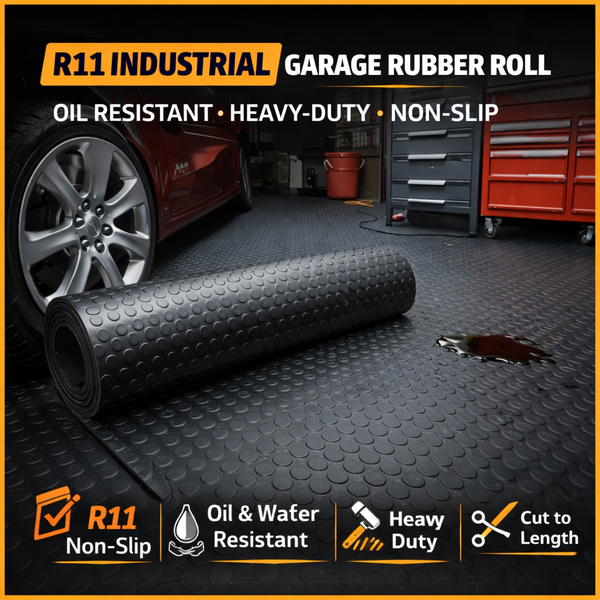
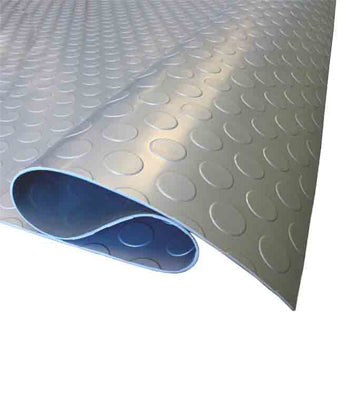
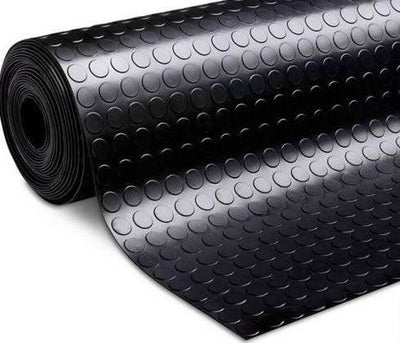
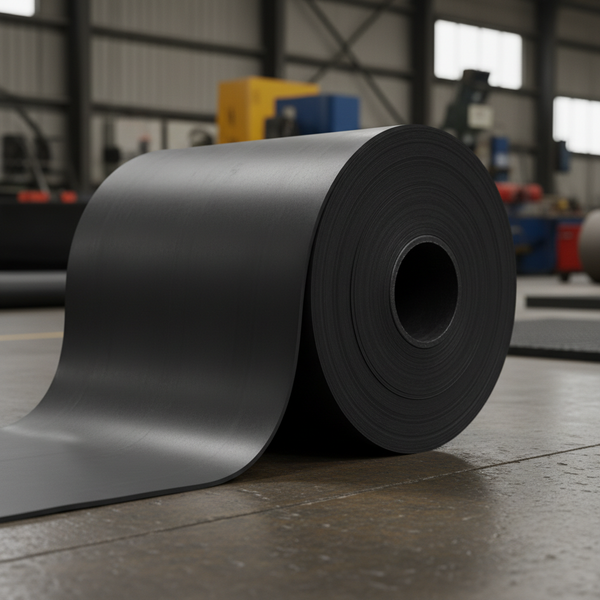
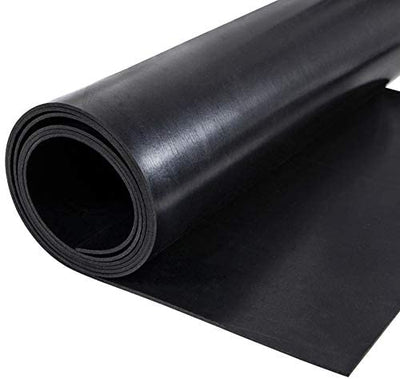
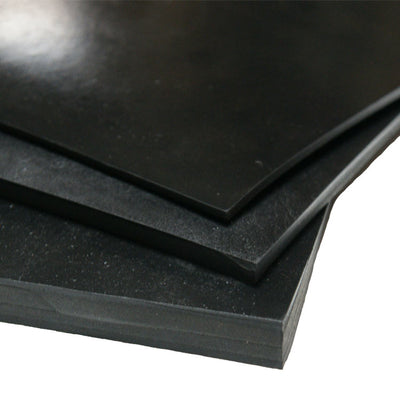
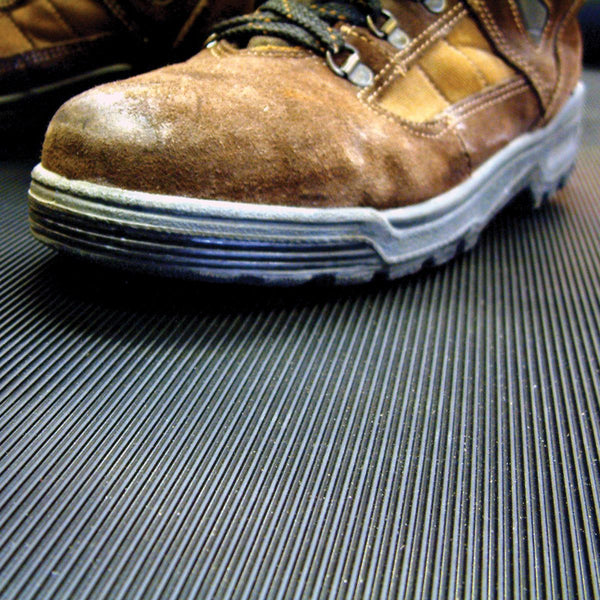
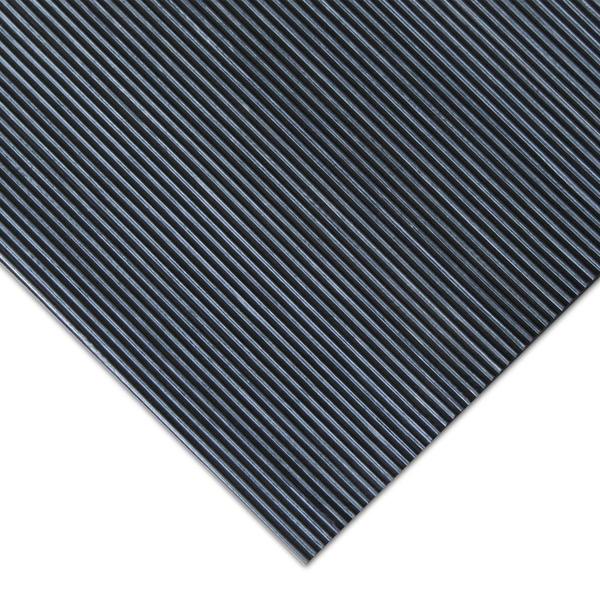
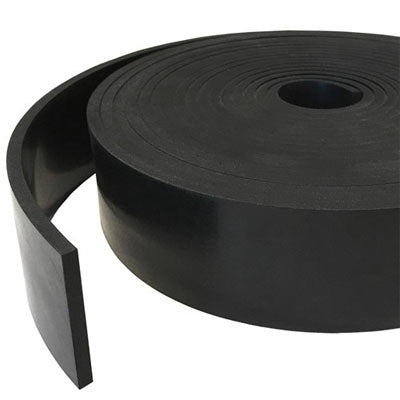
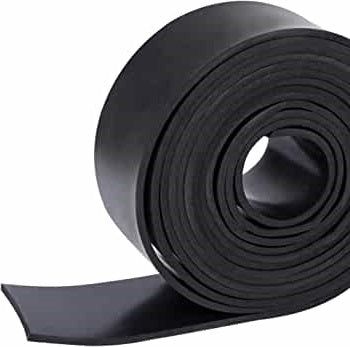
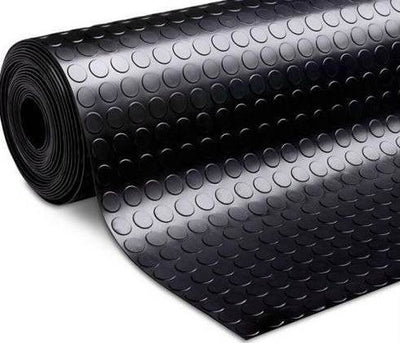
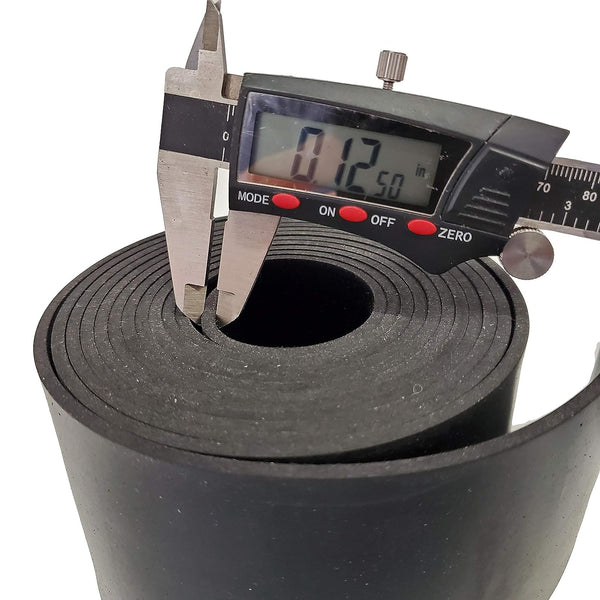
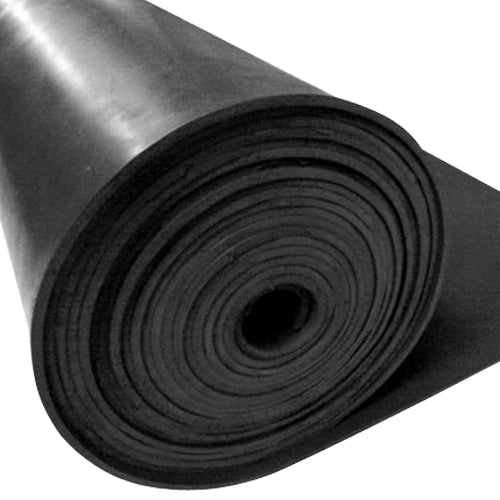
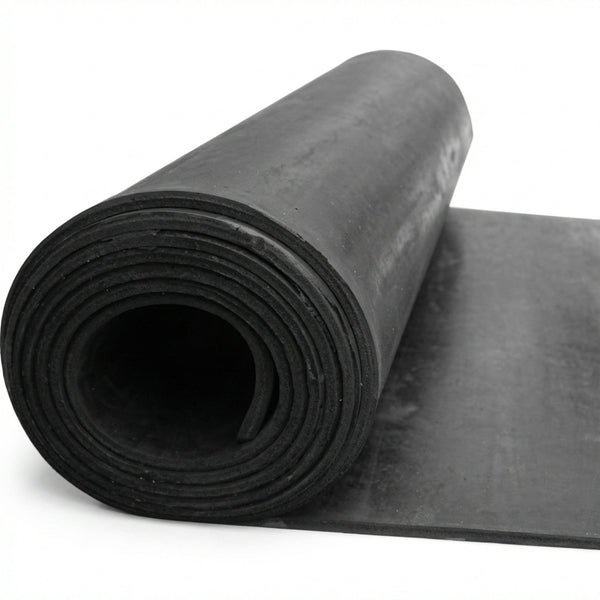
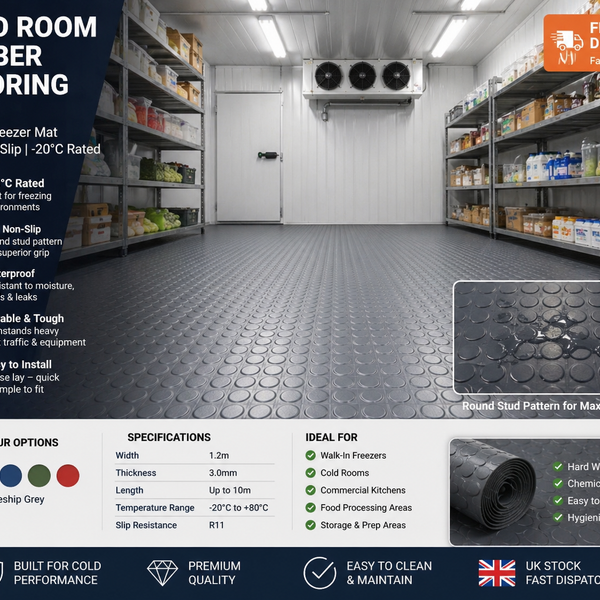
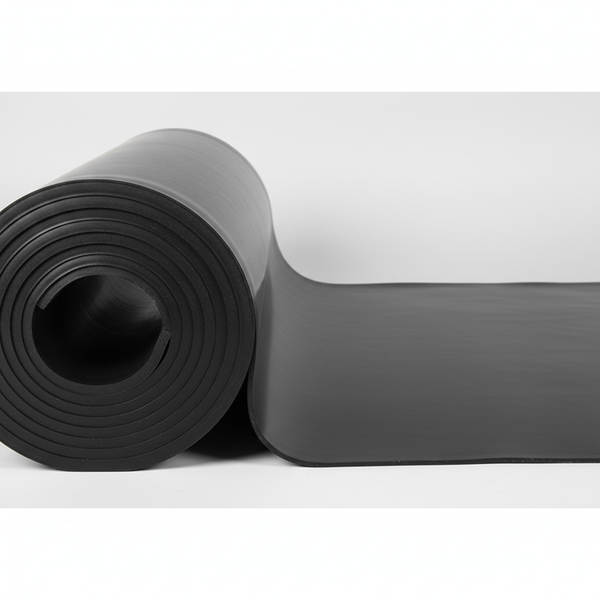
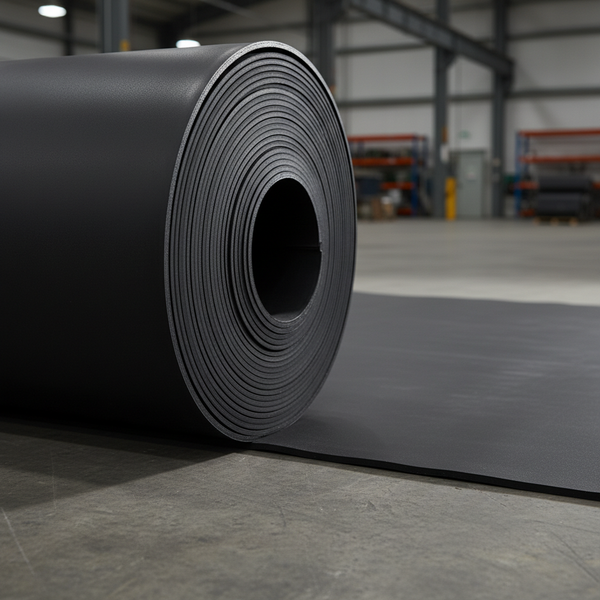
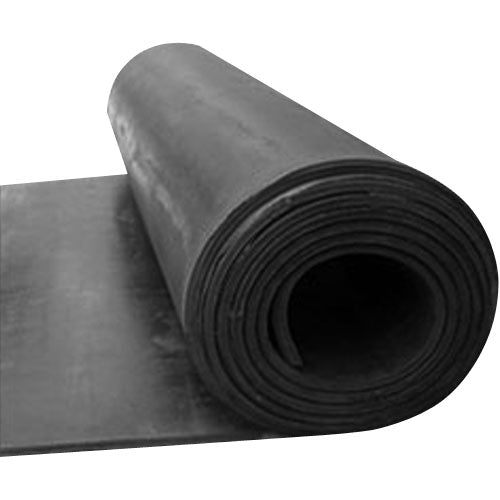
Rolls are the most cost-effective format for covering large areas. Available in widths of 0.9m, 1.0m, 1.2m, 1.5m, 1.8m, and 2.0m, with standard lengths of 5m or 10m (cut-to-size also available). Roll matting is ideal for factory floors, gym areas, van linings, and any application requiring seamless coverage. Surface patterns include smooth, fine ribbed, heavy ribbed, studded, and diamond-tread. Thicknesses run from 3mm up to 22mm. Browse our full range of rubber matting rolls.
Rubber Tiles & Interlocking Mats
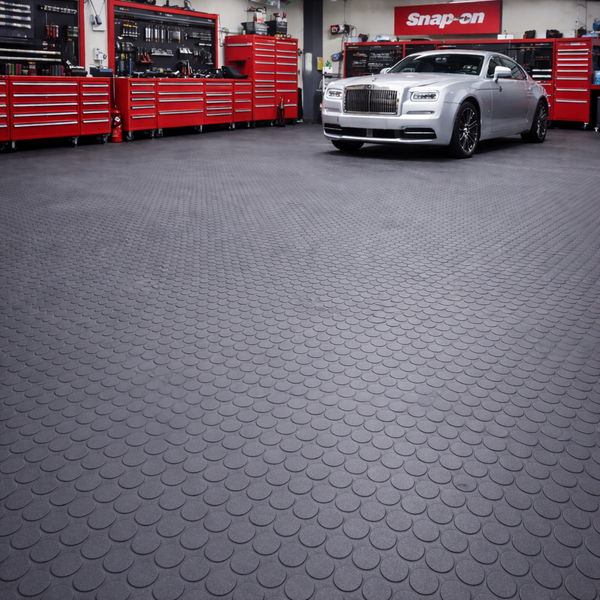
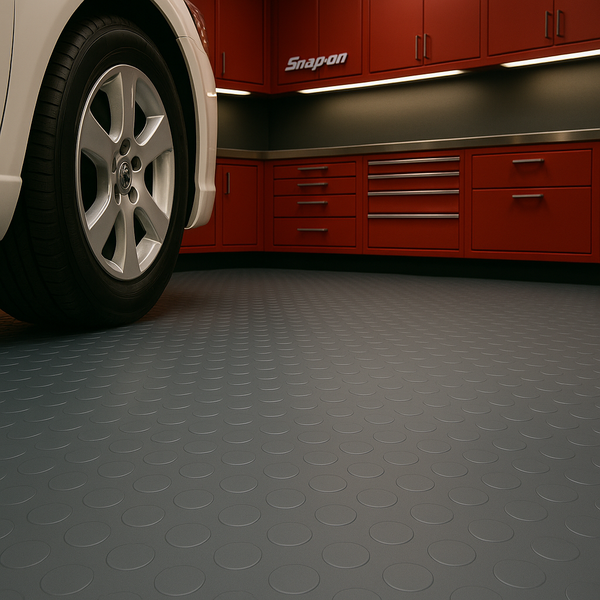
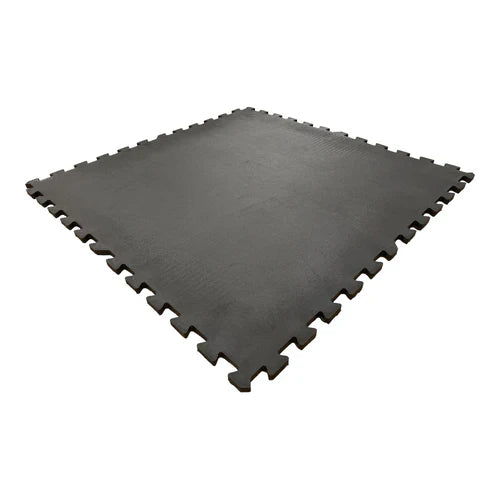
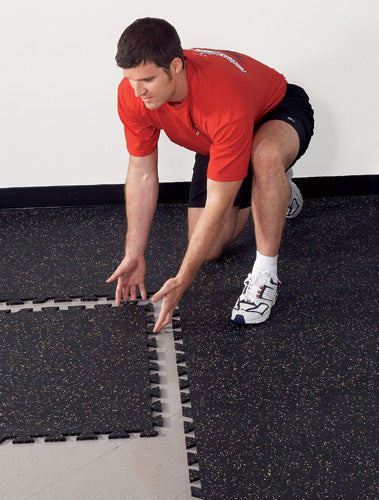
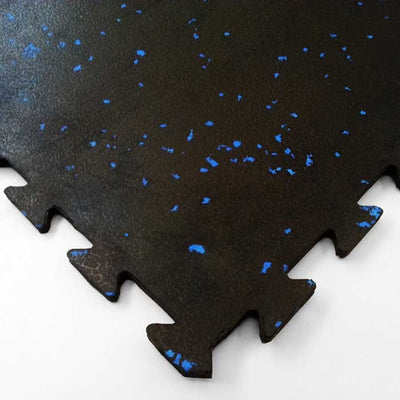
Rubber tiles offer the flexibility of modular installation — fit around obstacles, replace individual worn sections, and remove without damaging the subfloor. Standard sizes are 500mm × 500mm and 1000mm × 1000mm, with thicknesses from 10mm to 40mm. Interlocking rubber tiles use a jigsaw-edge connection that eliminates trip hazards at joins. Popular for gym floors, playground safety surfaces, and garage flooring.
Rubber Sheets
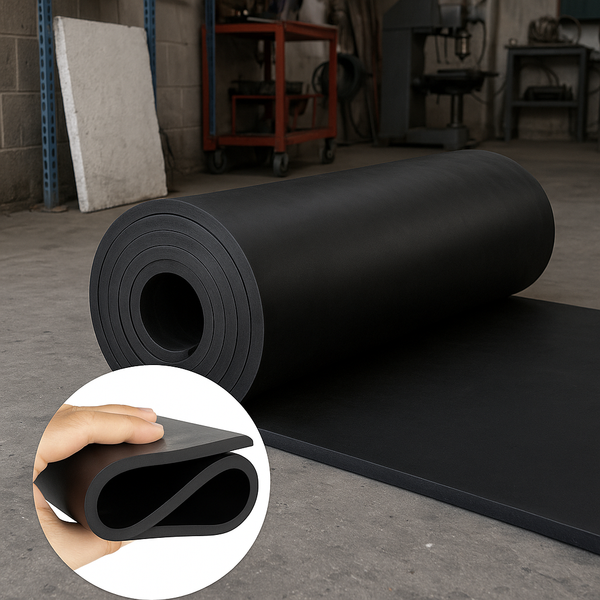
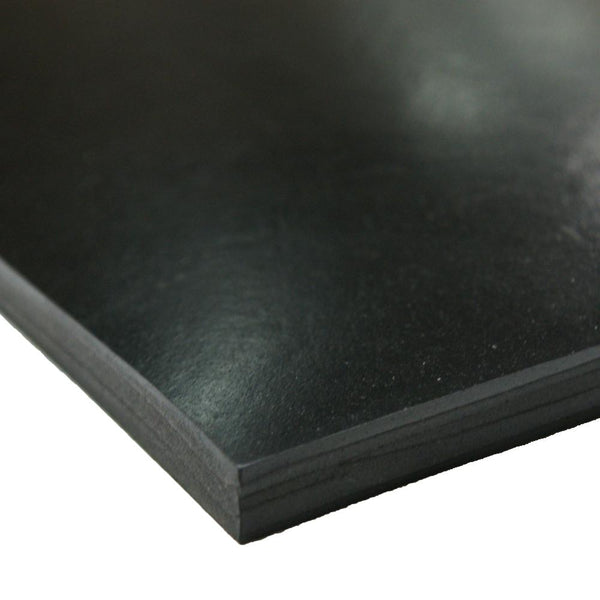
Rubber sheeting differs from matting in that it is typically supplied in larger dimensions and higher thicknesses — used as a technical material rather than a finish floor covering. Supplied in 1.2m or 1.4m widths on rolls or as cut sheets, in thicknesses from 1.5mm to 50mm. Applications include gasket cutting, machine bases, noise dampening, vibration isolation, and vehicle mud flaps. Available in SBR, EPDM, nitrile, neoprene, and natural rubber compounds.
Individual Mats & Entrance Matting
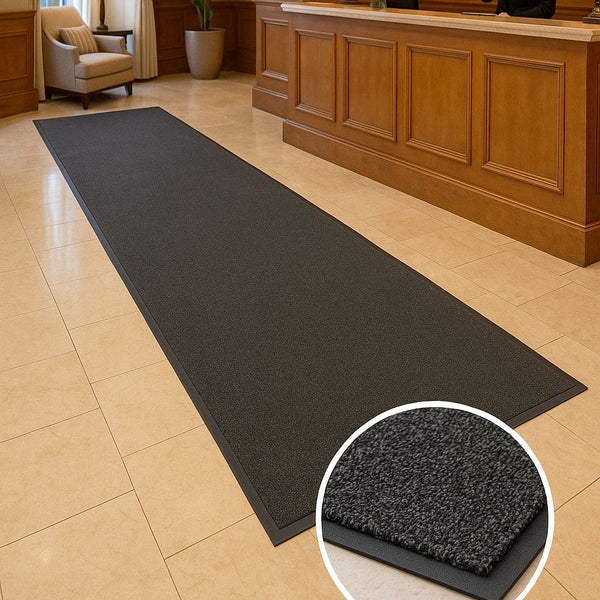
Pre-cut individual mats for specific locations — entrance doors, machine bases, workstations. Entrance matting is typically 3–10mm in ribbed or coir-backed rubber construction, designed to trap dirt and moisture at building entry points. Available in standard sizes (600×900mm, 900×1500mm, 1200×1800mm) or cut to fit recessed mat wells. Heavy-duty entrance matting with logo printing is available for commercial lobbies.
Rubber Matting by Application
No single rubber matting product suits every application. The correct specification depends on load type, chemical exposure, slip risk, and regulatory requirements. Below is a guide to the most common UK applications.
Industrial & Factory Rubber Matting
Industrial environments demand rubber matting capable of withstanding forklift traffic, chemical spills, heavy dropped loads, and continuous foot traffic across multiple shifts. Specify minimum 10mm SBR for pedestrian-only industrial floors; 15–22mm for forklift areas (rated to 3–5t axle load). Where oils, hydraulic fluids, or solvents are present, nitrile rubber is mandatory — SBR swells and degrades rapidly in petroleum environments. Anti-fatigue matting at production line workstations reduces musculoskeletal injury risk and is recommended under HSE Manual Handling guidance.
Gym & Fitness Rubber Flooring
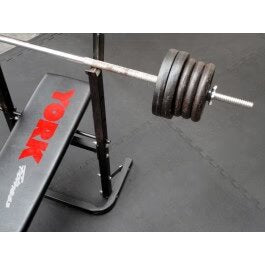
Gym rubber flooring must withstand dropped weights, rolling equipment, and high foot traffic while providing cushioning and noise absorption. Standard gym floors use 10mm SBR roll matting; Olympic lifting platforms require 20–40mm for adequate impact absorption. Free weights areas are typically finished with 15mm studded or smooth SBR tiles. Spin and aerobics studios often use 6–8mm roll matting for comfort without excessive spring. View our gym rubber matting — the same products used by commercial gym operators across the UK.
Stable & Equestrian Rubber Matting
Stable mats must withstand concentrated point loads from horse hooves (up to 500kg on a 12cm² contact area), resist urine and stable disinfectants, and provide thermal insulation against concrete floors. Standard stable mat specification is 17mm natural rubber or SBR in 1.2m × 1.8m panels. Heavy-duty equestrian matting for high-traffic areas (yard, wash bay, horsebox loading) is typically 22mm. Stable mats are the single most effective welfare intervention for stabled horses — they reduce bedding costs, improve comfort, and prevent capped hocks.
Playground Safety Surfacing
Playground rubber matting must comply with BS EN 1177:2018 — the standard governing impact-attenuating surfaces for playground equipment. The critical parameter is Critical Fall Height (CFH): the maximum height from which a child can fall onto the surface without sustaining a life-threatening head injury. Required matting thickness increases with CFH: typically 40mm for 1.0m, 65mm for 1.5m, and 100mm for 2.0m+ equipment. EPDM rubber in interlocking tiles or wet-pour form is the standard solution — UV-stable, colour-fast, and certified to the required impact attenuation values.
Entrance & Commercial Matting
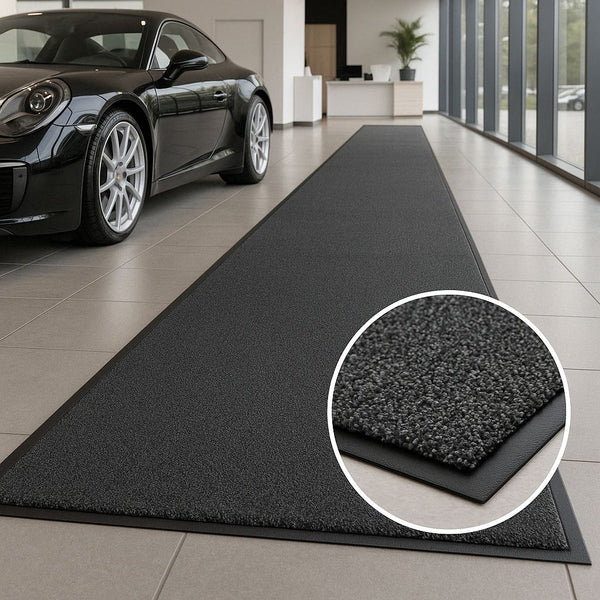
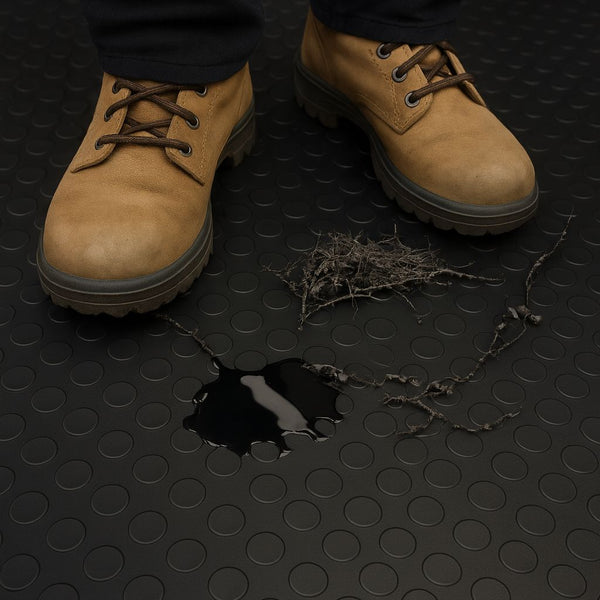
Entrance matting serves two functions: removing dirt and moisture from footwear before it reaches the interior floor, and providing slip resistance in the high-risk transition zone between wet exterior and dry interior surfaces. Specify 3–6mm ribbed rubber or coir-rubber combination matting for domestic and light commercial use; 6–10mm heavy-duty barrier matting for high-footfall commercial entrances (retail, leisure, office). Matting should extend for at least 1.5m in the direction of travel to allow three full footsteps of scraping action.
Outdoor & Garden Rubber Matting
Outdoor applications require EPDM compound exclusively. UV radiation degrades SBR and natural rubber rapidly when exposed permanently — causing surface cracking and hardening within 2–3 years. EPDM remains flexible and stable from −40°C to +80°C, making it suitable for the full range of UK weather conditions. Applications include garden paths, patio edging, pool surrounds, decking overlays, and outdoor gym areas. Perforated and open-grid patterns promote drainage and prevent water pooling.
How to Choose the Right Rubber Matting
Selecting the correct rubber matting requires matching four variables: compound, thickness, surface pattern, and size format. Follow this decision process to specify correctly first time.
Step 1: Identify the Chemical Environment
Is oil, fuel, solvent, or animal urine present? If yes → nitrile or natural rubber. Is the surface permanently outdoors? If yes → EPDM only. Otherwise → SBR is the standard, cost-effective choice.
Step 2: Determine the Load Requirement
| Thickness |
Application |
Load Rating |
Slip Rating |
| 3–6mm |
Entrance mats, light foot traffic, anti-slip underlays |
Pedestrian only |
R9–R10 |
| 6–10mm |
Workshops, garages, van lining, storerooms |
Light vehicles, pallet trucks |
R10–R11 |
| 10–15mm |
Industrial floors, gym areas, stable mats |
Forklifts to 3t axle |
R11 |
| 15–22mm |
Heavy industry, Olympic lifting, equestrian |
Heavy plant and equipment |
R11–R12 |
| 25–40mm |
Playground safety, Olympic lifting platforms |
Impact attenuation (BS EN 1177) |
R10 |
Step 3: Choose the Surface Pattern
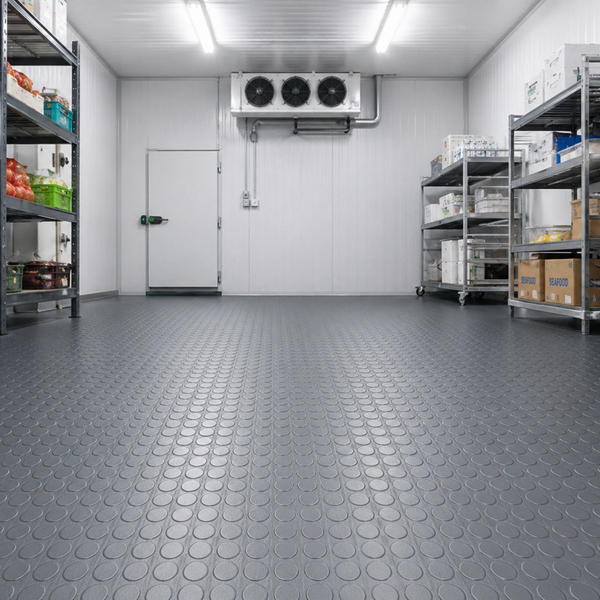
Smooth: Easy to clean, suitable for food areas and laboratories. Lower slip resistance when wet — combine with drainage channels.
Fine ribbed: Good balance of grip and cleanability — the standard choice for entrances and light commercial use.
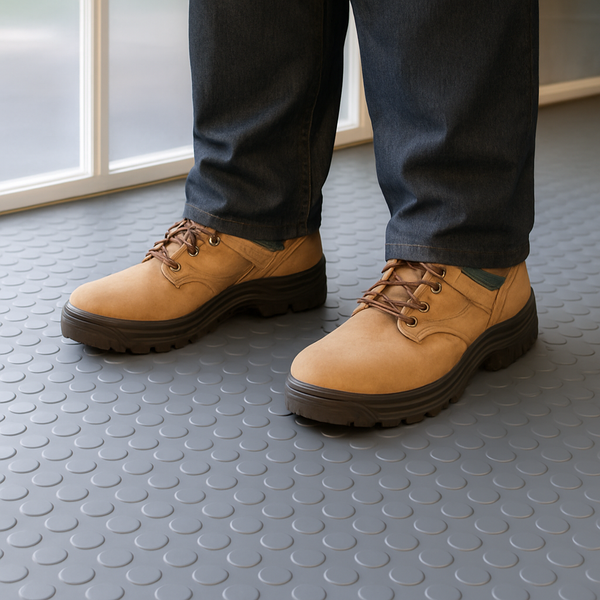
Heavy ribbed / studded: Maximum grip for pedestrian-only areas; channels water away from the walking surface.
Checker plate / diamond tread: Industrial aesthetic with good slip resistance; popular for vehicle ramps, loading bays, and trailer floors.
Open grid / drainage: Allows liquids to drain through; essential for wash bays, pool surrounds, and wet processing areas.
UK Standards & Compliance
Rubber matting in the UK is governed by several British and European standards that define minimum performance requirements for commercial and public installations.
DIN 51130 — Slip Resistance Classification
DIN 51130 is the German standard adopted across the UK and EU for classifying the slip resistance of floor coverings. It rates surfaces R9 to R13 based on the angle of inclination at which a test subject wearing standardised footwear begins to slip on an oil-lubricated surface. Higher R-rating = greater slip resistance. HSE guidance recommends a minimum R10 for wet commercial areas. R11 or above is specified for industrial kitchens, wash bays, and food production floors.
BS EN 1177:2018 — Playground Safety Surfacing
BS EN 1177 specifies requirements for impact-attenuating surfaces beneath and around playground equipment. Compliance is mandatory for all publicly accessible playground installations in the UK. The standard defines Critical Fall Height (CFH) — the maximum fall height the surface can safely accommodate — which determines the minimum matting thickness required.
HSE Manual Handling & Workplace Regulations
The Workplace (Health, Safety and Welfare) Regulations 1992 require that floors shall be suitable, in good condition, and free from obstruction. Anti-fatigue matting at standing workstations directly addresses the HSE's guidance on reducing musculoskeletal disorders in the workplace. Slip-resistant rubber matting in wet work areas addresses the HSE's commitment to reducing the 11,000+ annual serious injuries caused by slips and trips in UK workplaces.
Installation Guide
Correct installation is essential for both performance and longevity. Follow these steps for a professional result.
Surface Preparation
The subfloor must be clean, dry, flat, and free from contamination. Remove all grease, oil, dust, and loose material. Any raised fixings, bumps, or hollows greater than 3mm should be filled or ground back — rubber matting will conform to subfloor imperfections and may rock or wear unevenly over high spots. Concrete should be cured for a minimum of 28 days before permanent rubber mat installation to prevent adhesion failure from outgassing moisture.
Cutting Rubber Matting
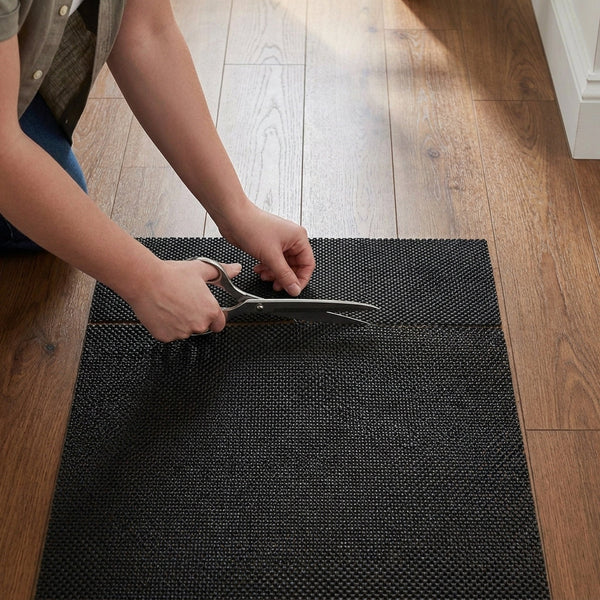
For 3–6mm matting: score with a sharp Stanley knife using a steel straight edge, then snap. For 6–12mm: use a carpet knife or heavy-duty box cutter with multiple passes. For 15mm+: use a jigsaw with a fine-tooth blade (20–25 TPI) or a circular saw with a metal-cutting blade. Always cut on a sacrificial board. Mark cut lines with chalk or a silver marker — pencil is hard to see on black rubber.
Laying Without Adhesive
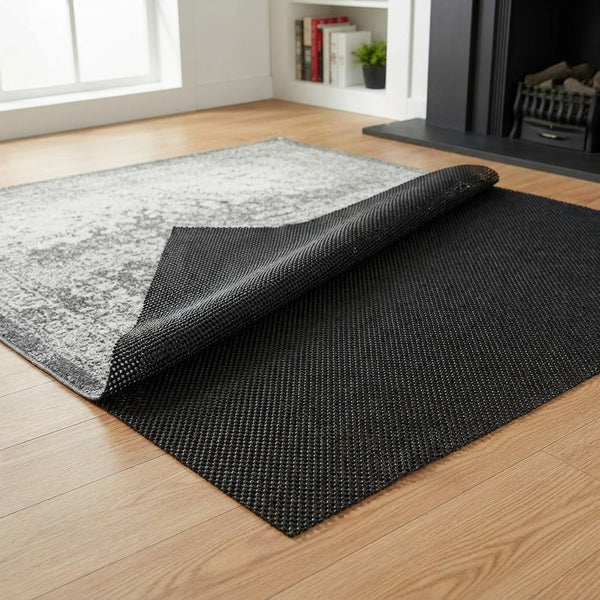
Most rubber matting applications do not require adhesive. The weight and natural grip of rubber keeps rolls in place on flat surfaces. Butt joins tightly together — rubber rolls tend to relax and expand slightly after unrolling, so allow 30 minutes before making final cuts. For interlocking tiles, start from the centre of the room and work outward to minimise edge cuts.
Permanent Installation with Adhesive
For high-traffic areas, ramps, or inclined surfaces, permanent bonding is recommended. Use a contact adhesive (such as Evo-Stik 528) or a pressure-sensitive flooring adhesive. Apply to both surfaces, allow flash-off (approximately 10 minutes), then press firmly into position — rubber mats are not repositionable once contact adhesive is used. Double-sided carpet tape is suitable for light-duty or temporary installations.
Rubber Matting Cost Guide UK 2025
Rubber matting prices in the UK vary significantly by compound, thickness, and format. The following price ranges reflect current retail pricing including free UK delivery.
| Product Type |
Thickness |
Price Per m² / Unit |
Best For |
| SBR Ribbed Roll |
3mm |
£8–£14/m² |
Entrance mats, light duty |
| SBR Studded Roll |
6mm |
£14–£22/m² |
Workshops, vans, garages |
| SBR Industrial Roll |
10mm |
£22–£35/m² |
Factory floors, heavy duty |
| EPDM Outdoor Roll |
6mm |
£18–£28/m² |
Outdoor areas, garden paths |
| Nitrile Sheet |
3–6mm |
£25–£45/m² |
Oil-resistant applications |
| Gym Rubber Tiles |
10–20mm |
£20–£40/m² |
Gym floors, fitness studios |
| Stable Mat (individual) |
17–22mm |
£35–£65 each |
Horse stables, equestrian |
| Playground Tiles (BS EN 1177) |
40–65mm |
£40–£80/m² |
School playgrounds |
| Anti-Fatigue Mat |
9–12mm |
£25–£60 each |
Standing workstations |
All prices include free UK delivery. Orders before 2pm are dispatched same day. View current prices on our full rubber matting range — over 180 products available.
Why Choose Rubber Matting Direct?
-
180+ products — the UK's most comprehensive rubber matting range
-
Free UK delivery on all orders, no minimum spend
-
Same-day dispatch on orders placed before 2pm
-
Cut to size — all roll products available in any length
-
Expert specification — contact us with your application requirements
-
Trade accounts — volume pricing for contractors, facilities managers, and local authorities
-
UK stock — all products held in UK warehouses, no import delays
Frequently Asked Questions
What thickness of rubber matting do I need?
3–6mm for entrance areas and light foot traffic. 6–10mm for workshops and garages. 10–15mm for industrial use with vehicles. 15–22mm for heavy plant, gym weights, and equestrian. 25–40mm for playground safety surfacing to BS EN 1177.
What is SBR rubber matting?
SBR (Styrene Butadiene Rubber) is the most widely used rubber matting compound — manufactured from 90%+ recycled rubber (typically post-consumer vehicle tyres). It offers excellent abrasion resistance, good load-bearing properties, and is the most cost-effective option for indoor applications. Not suitable for permanent outdoor UV exposure or oil/chemical environments.
What is EPDM rubber matting?
EPDM (Ethylene Propylene Diene Monomer) is a synthetic rubber compound that resists UV degradation, weathering, and ozone. It's the correct specification for outdoor rubber matting, playground safety surfaces, and coloured rubber applications where colour stability matters. EPDM is typically 20–30% more expensive than SBR but lasts significantly longer in exposed environments.
Can I use rubber matting outside?
Yes, but specify EPDM compound only. SBR and natural rubber degrade rapidly under UV — surface cracking and hardening within 2–3 years of permanent outdoor exposure. EPDM remains stable from −40°C to +80°C and is fully weatherproof for UK conditions.
Does rubber matting need adhesive?
Usually no. The weight and grip of rubber keeps most mats in place on flat floors. For ramps, inclines, or high-traffic permanent installations, use contact adhesive or double-sided tape. Interlocking tiles need no adhesive.
What rubber matting is best for a stable?
17mm natural rubber or SBR stable mats (1.2m × 1.8m panels) are the industry standard. They withstand horse hoof pressure, resist stable disinfectants and urine, insulate against cold concrete, and reduce bedding requirements by up to 50%. Browse our equestrian rubber matting.
How do I cut rubber matting?
3–6mm: score and snap with a Stanley knife. 6–12mm: heavy-duty carpet knife with multiple passes. 15mm+: jigsaw with fine-tooth blade. Always use a steel straight edge and cut on a sacrificial board.
What is the slip resistance rating of rubber matting?
Our products are rated R9–R13 to DIN 51130. R10 is the minimum for wet commercial areas. R11–R13 for industrial kitchens, wash bays, and food production. Each product page specifies its exact R-rating.
How long does rubber matting last?
SBR indoor: 15–20 years. EPDM outdoor: 10–15 years. Nitrile in oil environments: 10–15 years. Natural rubber equestrian: 15–20+ years. The main risk factors are UV exposure (use EPDM outdoors) and petroleum solvent contact with SBR or natural rubber.
Can rubber matting be recycled?
Yes. SBR matting is itself made from recycled rubber (vehicle tyres). At end of life, rubber matting can be returned to the rubber recycling stream for reprocessing into crumb rubber or new matting. Many local authority civic amenity sites accept rubber matting for recycling. Contact your local council or a specialist rubber recycler.
Is rubber matting fire resistant?
Standard rubber matting is not inherently fire resistant, but it has a relatively high ignition temperature compared to PVC or foam alternatives. For applications requiring fire resistance certification (public buildings, transport, offshore), specify BS 476 or EN 13501 rated rubber matting. Contact us to specify fire-rated products for your project.
What width does rubber matting come in?
Standard roll widths are 0.9m, 1.0m, 1.2m, 1.5m, 1.8m, and 2.0m. The most common UK width is 1.2m for general purpose and 2.0m for wide-aisle industrial applications. Wider rolls are available to special order. Tiles and individual mats are fixed size — typically 500mm × 500mm or 1000mm × 1000mm.
Do you supply rubber matting to trade customers?
Yes. Trade accounts are available for contractors, facilities managers, NHS trusts, local authorities, schools, and gym operators. Trade pricing is available from 20m² upward. Contact us with your project specification for a trade quote. We supply rubber matting throughout mainland UK with next-day delivery available on most product lines.
What is the heaviest rubber matting you stock?
Our heaviest rubber matting is 22mm natural rubber stable matting and 22mm SBR heavy-duty industrial roll — both rated for heavy plant, forklift traffic, and equestrian use. For playground safety surfacing, tiles up to 100mm are available to achieve the Critical Fall Heights required by BS EN 1177 for tall play equipment.
Can rubber matting be used on underfloor heating?
Rubber matting is compatible with underfloor heating systems — it has good thermal conductivity compared to foam alternatives and won't off-gas harmful compounds at normal UFH temperatures (typically 27–35°C floor surface temperature). Avoid rubber matting with a thermal resistance (tog value) above 0.15 for efficiency. Check with your UFH manufacturer for their specific recommendations.
Ready to order? Browse our complete rubber matting range — 180+ products, free UK delivery, same-day dispatch on orders before 2pm. Need help specifying? Call our technical team or use the live chat — we've been supplying rubber matting across the UK for over a decade.