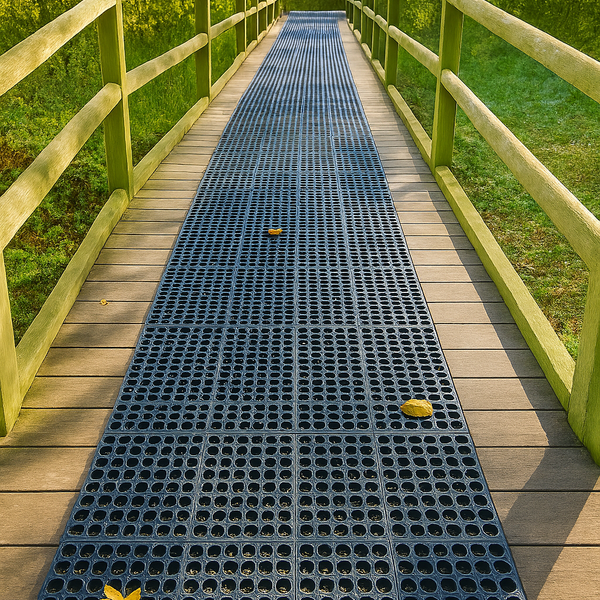
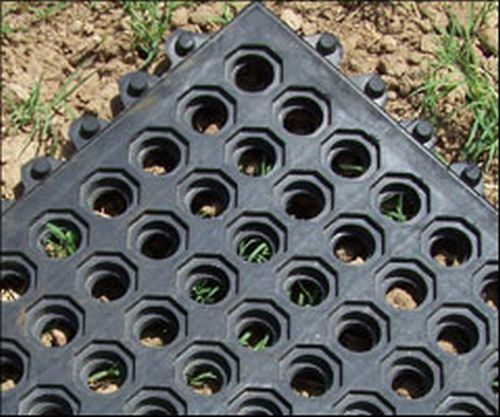
What Are Rubber Grass Mats?
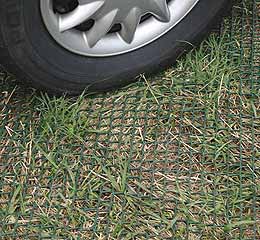
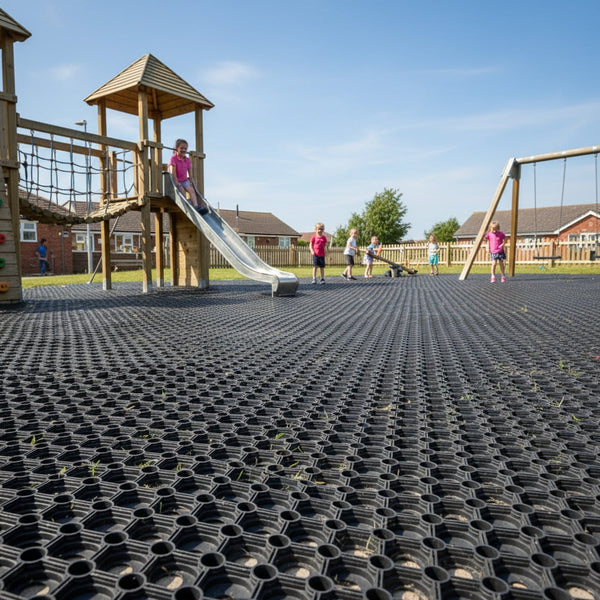
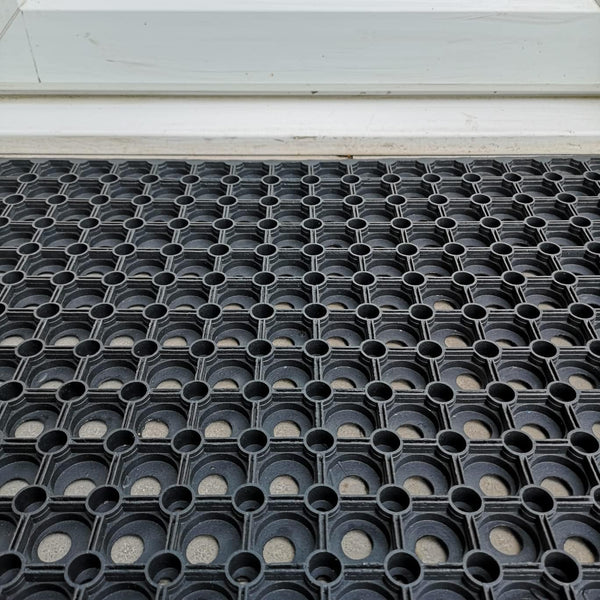
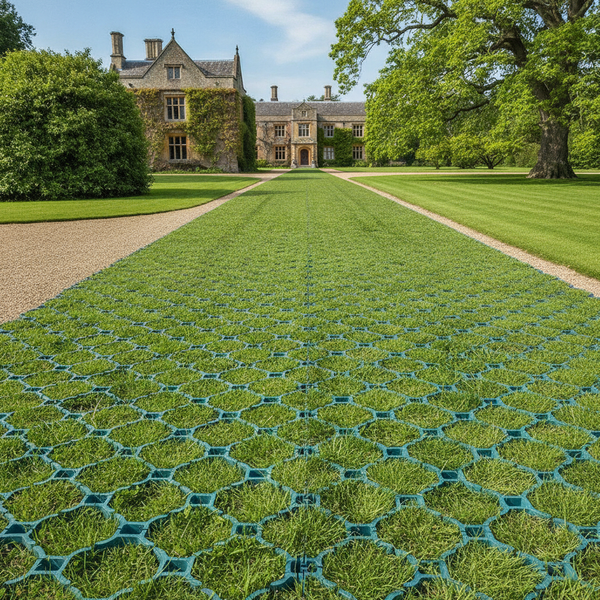
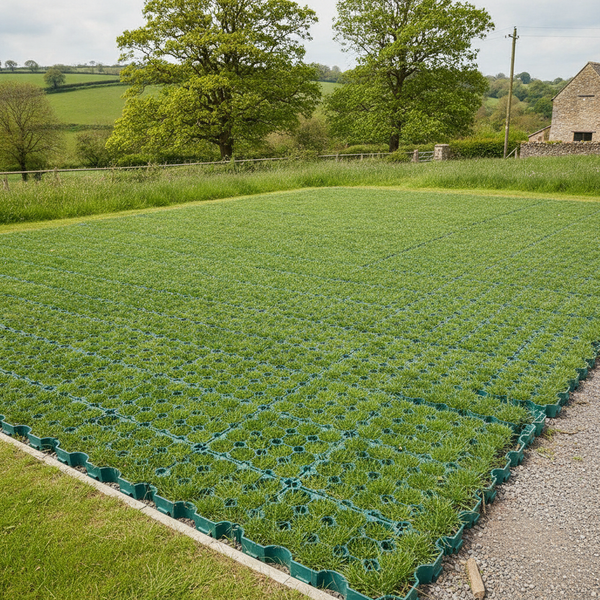
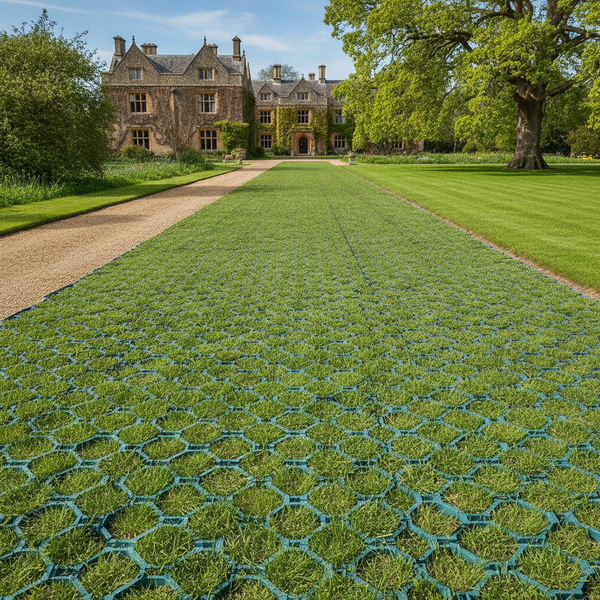
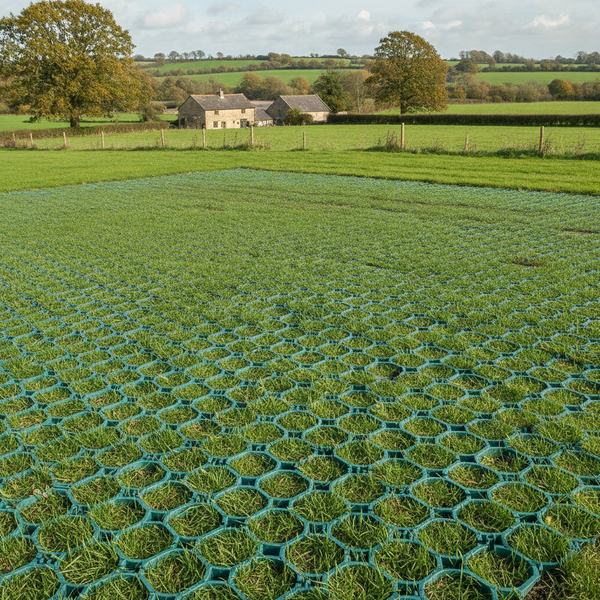
Rubber grass mats are open-cell rubber panels or rolls designed to protect grass, soil, and soft ground from compaction, wear, and waterlogging — while allowing grass to grow through and maintaining natural drainage. They are the most practical and durable ground reinforcement solution available in the UK, outperforming plastic grass grids, timber decking, and concrete in both longevity and performance across the range of conditions found in British gardens, farms, and commercial sites.
The base material is SBR (Styrene Butadiene Rubber) — either recycled from post-consumer vehicle tyres or virgin compound — vulcanised and UV-stabilised for permanent outdoor use. Unlike plastic alternatives which crack in freeze-thaw conditions, rubber flexes, absorbs impact, and retains its structural integrity across the full UK temperature range from −40°C to +70°C. Our range of rubber grass mats covers 38 products from 10mm lightweight pedestrian matting to 25mm heavy-duty vehicle-rated panels — all available cut to size with free UK delivery.
Why Choose Rubber Grass Mats Over Plastic Grids?
| Property |
Rubber Grass Mats |
Plastic Grass Grids |
Gravel |
Timber |
| Flexibility (uneven ground) |
✅ Excellent |
❌ Rigid — can rock |
N/A |
⚠️ Limited |
| Freeze-thaw resistance |
✅ Yes |
⚠️ Can crack |
✅ Yes |
❌ Warps/rots |
| Grip in wet conditions |
✅ Excellent (rubber texture) |
⚠️ Moderate |
⚠️ Moderate |
❌ Slippery when wet |
| SUDS drainage |
✅ Open cell |
✅ Open cell |
✅ Permeable |
❌ Impermeable |
| Lifespan outdoors |
10–15 years |
5–10 years |
Indefinite |
5–10 years |
| Removable/reusable |
✅ Yes |
✅ Yes |
❌ No |
⚠️ Difficult |
| Vehicle rated |
✅ Up to 150t/m² |
✅ Some grades |
✅ Yes |
❌ No |
Types of Rubber Grass Mats
Rubber Grass Mat Rolls
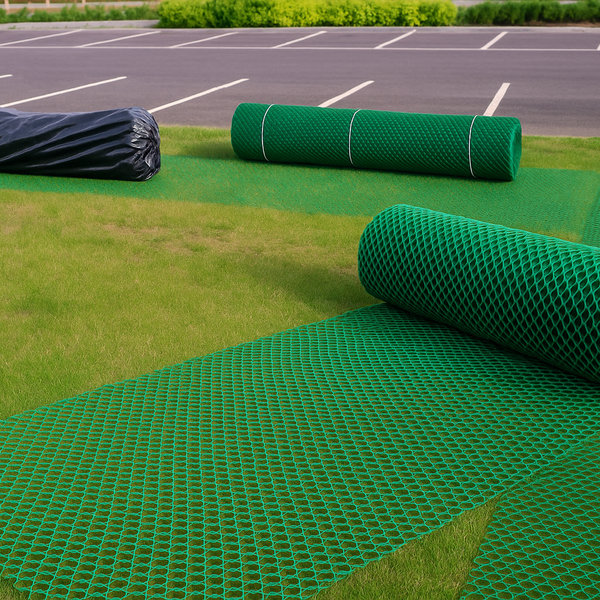
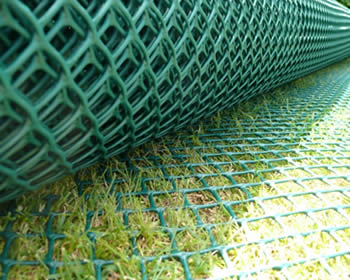
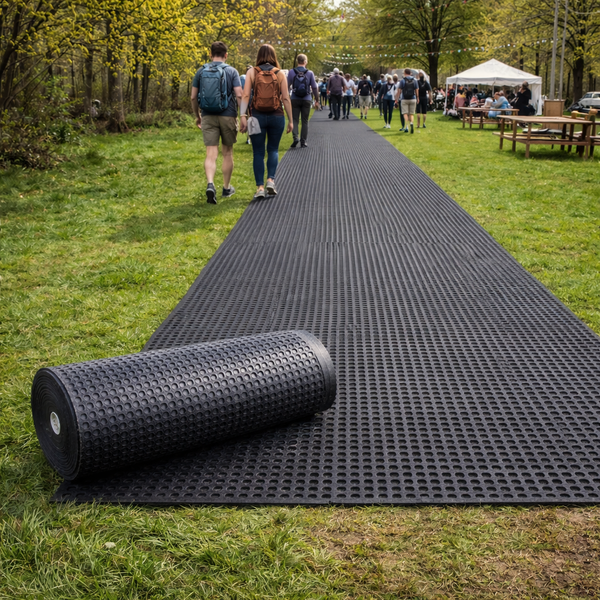
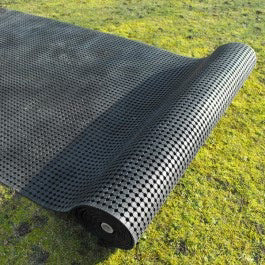
The most cost-effective format for long access routes, event walkways, and large areas. Rolls are typically 0.9m–2.0m wide and sold per linear metre — cut to any length on site with a heavy-duty knife. 10–17mm thickness for pedestrian and light use. Best for: garden paths, event sites, festival access routes, camping field walkways, golf course muddy areas, and behind goal areas on sports pitches. Browse rubber grass mat rolls.
Interlocking Rubber Grass Panels
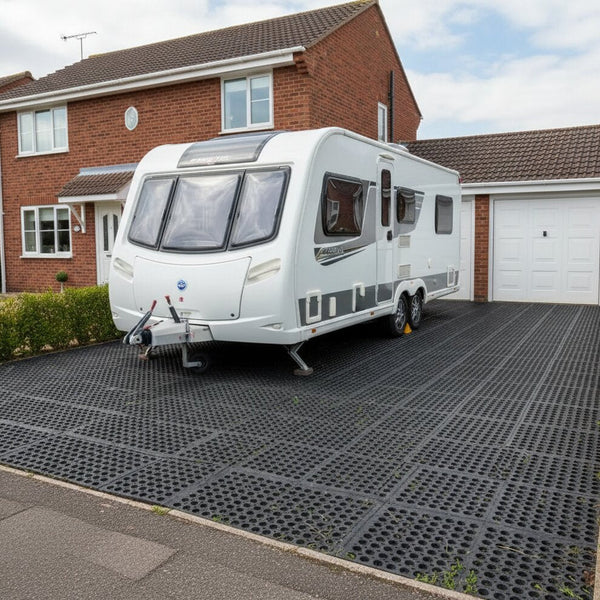
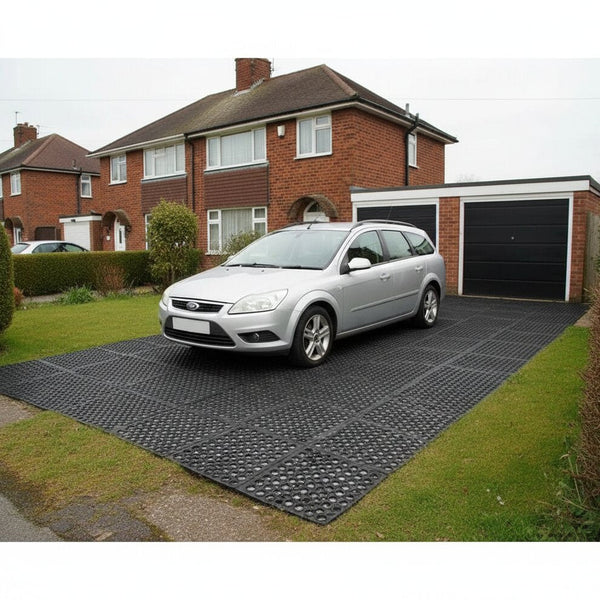
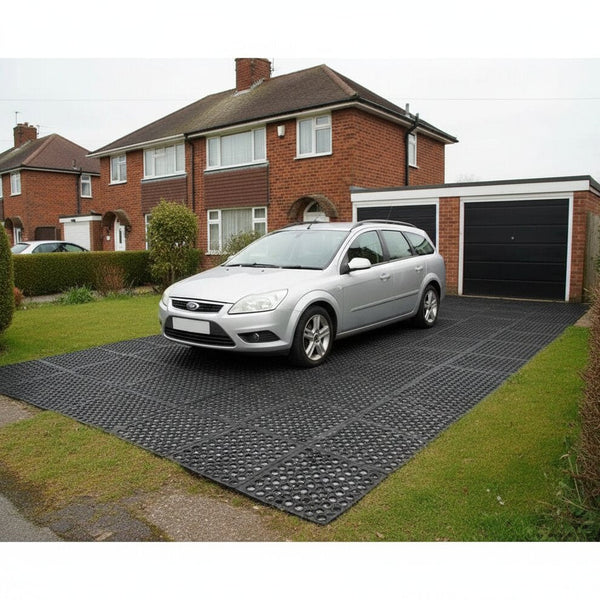
Modular panels (typically 500mm × 500mm or 1000mm × 500mm) that interlock to cover any area. Easy to transport, install, and reinstall. Individual panels can be replaced if damaged. Heavier vehicle-rated panels in 17–25mm thickness for driveways, car parks, and equestrian use. Best for: domestic driveways, overflow car parks, stable yard entrances, event parking areas, and any application where the surface will be occasionally removed and reinstated.
Grass Protection Mesh
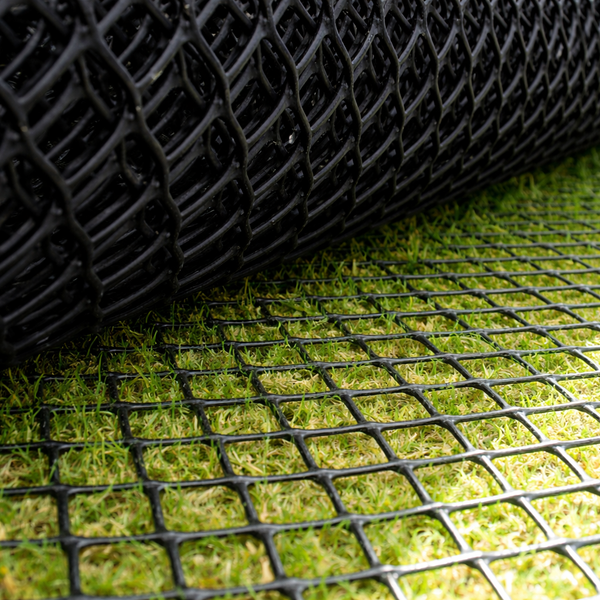
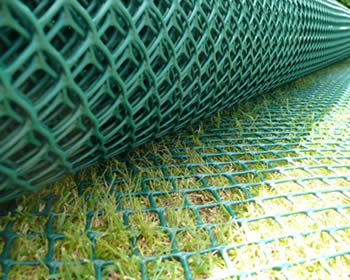
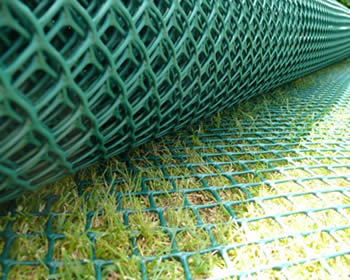
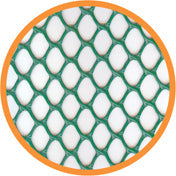
Lightweight open-mesh rubber matting (typically 10mm, large roll format) for temporary lawn protection at events, film shoots, outdoor weddings, and markets. Protects grass from foot traffic and equipment, then rolls up cleanly without leaving marks. Available in widths to 2m and lengths to 30m.
Rubber Grass Mats by Application
Garden Driveways
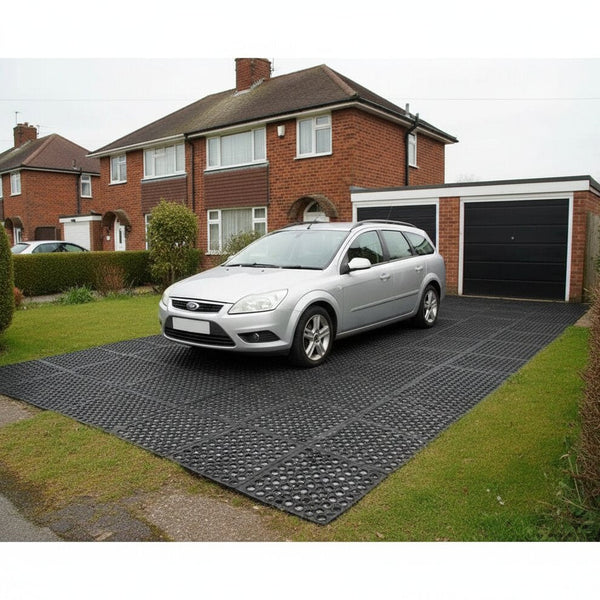
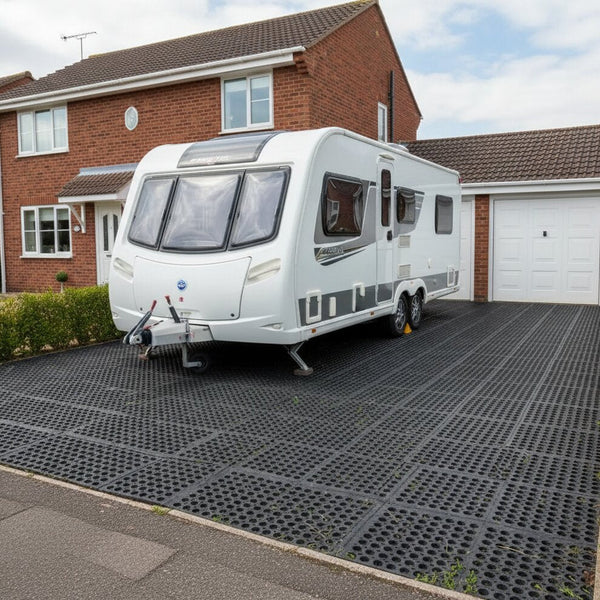
Rubber grass mats for domestic driveways must be heavy-duty rated — minimum 150 tonnes per m² load capacity — and 17mm+ in thickness. The open-cell structure is SUDS-compliant, increasingly required by UK planning authorities for domestic driveway surfacing under Schedule 2 of the Town and Country Planning (General Permitted Development) Order 2008. Grass grows through the cells, maintaining a natural appearance while providing a stable, mud-free surface. Install over a 50–100mm compacted MOT Type 1 sub-base for best results on heavy clay soils.
Overflow Car Parks
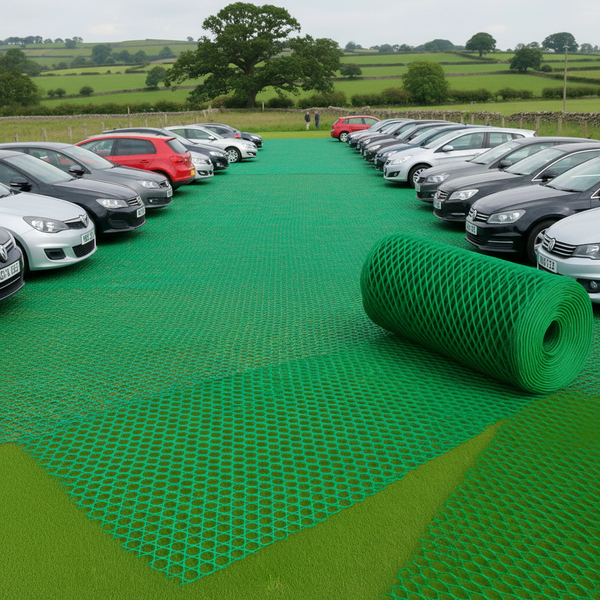
Events, rural venues, farm shops, and sports clubs frequently need temporary overflow parking on grass areas. Heavy-duty rubber grass panels (17–25mm, vehicle-rated) laid over the grass allow parking without destroying the surface — the load is distributed across the rubber grid, preventing compaction and rutting. After the event, remove the panels and the grass recovers within days. Far less expensive and disruptive than temporary tarmac or gravel. View vehicle-rated grass protection panels.
Garden Paths and Lawn Access
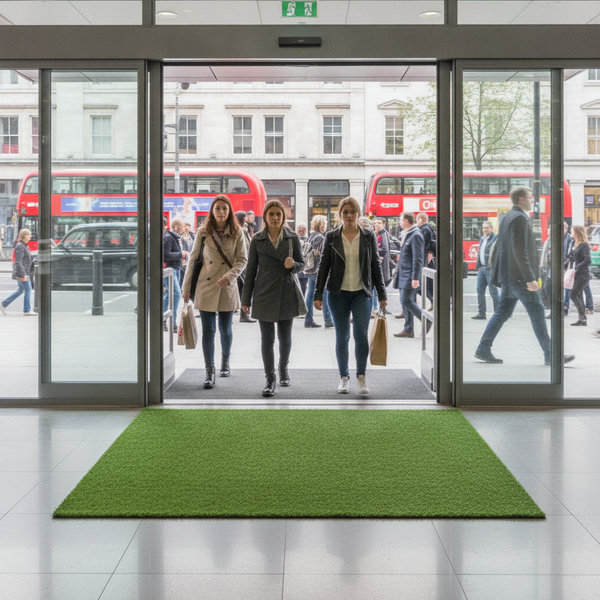
High-traffic garden paths — to garden offices, sheds, compost areas, vegetable plots — suffer rapid wear when only grass. Rubber grass mat rolls laid over these routes protect the turf, provide a clean, non-muddy surface in wet conditions, and look neat year-round. 10–12mm roll matting is sufficient for pedestrian-only paths. Cut to width with scissors for a neat finish against lawns and borders.
Equestrian and Stable Yards
Stable yard approaches, barn entrances, hay stores, and exercise area perimeters suffer intense ground churn from horse hooves and vehicle traffic. Heavy-duty rubber grass panels prevent the deep rutting and mud that makes these areas impassable in wet weather. The textured rubber surface provides grip for horses in wet conditions. Also used at agricultural shows and equestrian events for temporary horse walking areas and lorry park access.
Sports Pitches — Goal Mouth Protection
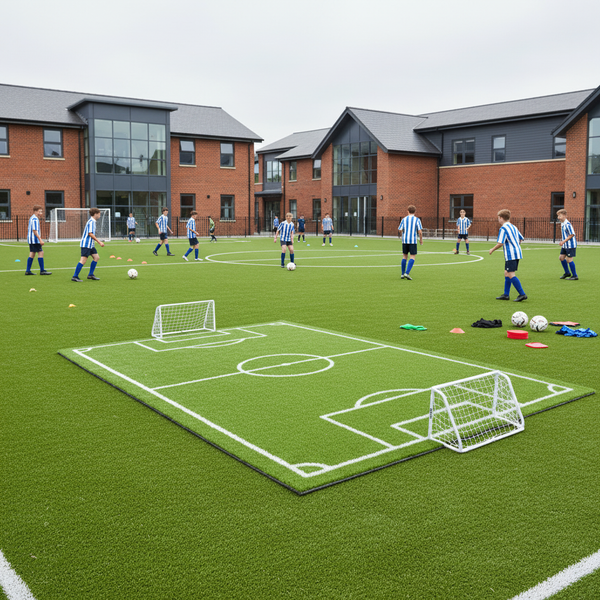
Goal mouth areas on football, rugby, and hockey pitches take disproportionate wear — cutting the pitch bare even when the rest of the surface is healthy. Rubber grass mat rolls laid over goal mouths during training or off-season periods protect the remaining turf and allow recovery. Standard practice at amateur football and rugby clubs across the UK.
Event Sites and Festival Access
Outdoor events, festivals, markets, and weddings regularly use rubber grass protection mesh and mat rolls to create pedestrian pathways, protect catering areas, and cover access routes from car parks to the event site. Lightweight 10mm mesh rolls are easy to transport, deploy, and collect. The rubber texture provides slip resistance on muddy ground that plastic walkway tiles do not.
Agricultural and Farm Use
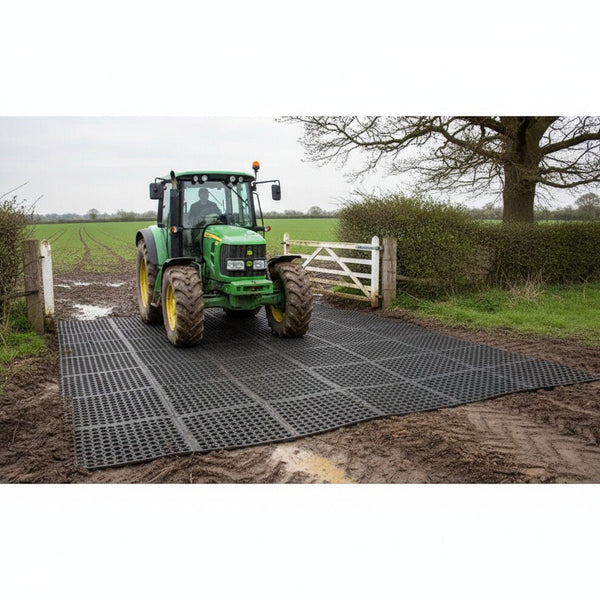
Rubber grass mats are used extensively on UK farms: hay barn access routes, milking parlour approaches, field gateway hardstanding areas, and silage clamp perimeters. Prevents the ground churn that creates deep mud ruts — which are a welfare concern for livestock and a health and safety risk for staff. Roll matting is quickly deployed at vulnerable areas before wet weather.
How to Choose the Right Rubber Grass Mat
Step 1: Identify the Load
-
Pedestrians only: 10–12mm roll matting — most cost-effective, easy to cut and lay
-
Cyclists and wheelchairs: 12–17mm panel or roll matting
-
Cars and light vans: 17–20mm heavy-duty panels, load-rated to 150t/m²
-
Tractors and heavy vehicles: 20–25mm reinforced panels — check axle load rating
-
Horses: 17–22mm reinforced panels with textured surface for hoof grip
Step 2: Permanent or Temporary?
For permanent installations (driveways, paths, car parks): interlocking panels over a prepared sub-base, secured with perimeter ground pins. For temporary or seasonal use (events, winter protection): loose-laid rolls or panels that can be removed and stored.
Step 3: Prepare the Ground
For pedestrian applications: simply level and clear debris from the grass surface. For vehicle applications: remove topsoil and lay 50–100mm compacted MOT Type 1 sub-base — this distributes load into the subgrade rather than compressing topsoil. On clay soils, a geotextile membrane beneath the sub-base prevents fines migration.
Installation Guide
-
Ground preparation: Level the area. Remove large stones and debris. For vehicle use, compact a granular sub-base.
-
Optional geotextile: Lay a weed-suppressing geotextile membrane on the prepared surface if weed growth is a concern.
-
Lay the mats: Unroll or position panels across the area, butting edges tight. Interlock panel edges where applicable.
-
Cut to fit: Use a sharp craft knife or scissors for rolls, or a jigsaw for thick panels. Mark cut lines with chalk.
-
Secure edges: For permanent installations, use galvanised ground pins at perimeter edges and at panel joins on slopes. For temporary use, leave loose-laid.
-
Infill (optional): For the best grass establishment through heavy-duty panels, lightly top-dress with a sand/seed mix and keep moist until established.
Rubber Grass Mats vs SUDS Planning Requirements
Since 2008, replacing a front garden with impermeable paving (concrete, tarmac, block paving) requires planning permission under the Town and Country Planning (General Permitted Development) Order. Rubber grass mats are permeable — surface water drains through the open-cell structure into the ground below — meaning they are classified as a sustainable drainage surface and do not require planning permission. This makes them increasingly popular for domestic driveway upgrades where planning consent would otherwise be needed.
Rubber Grass Mat Cost Guide UK 2025
| Product Type |
Thickness |
Load Rating |
Price (inc. free delivery) |
| Pedestrian roll matting |
10mm |
Foot traffic |
£8–£14/m² |
| Interlocking panels (pedestrian) |
12–15mm |
Foot traffic + cyclists |
£12–£20/m² |
| Interlocking panels (vehicle) |
17–20mm |
Cars and light vans (150t/m²) |
£18–£30/m² |
| Heavy-duty panels |
22–25mm |
Tractors and heavy vehicles |
£25–£40/m² |
| Grass protection mesh (roll) |
10mm |
Temporary events/pedestrian |
£6–£12/m² |
All prices include free UK delivery. Same-day dispatch on orders before 2pm. View current prices on our full rubber grass mat range — 38 products in stock.
Frequently Asked Questions
Are rubber grass mats SUDS compliant?
Yes. The open-cell structure allows surface water to drain through to the ground below — fully SUDS compliant. This means rubber grass mats for domestic driveways typically do not require planning permission under the 2008 GPDO, unlike impermeable hard surfacing.
What load rating do I need for car parking?
A minimum load rating of 150 tonnes per m² for domestic cars and light vans. Our heavy-duty vehicle panels are rated to 150–250t/m². Check the individual product spec for exact load ratings. For HGVs, tractors, or construction plant, contact us to specify the correct product.
How do I cut rubber grass mats?
10–15mm roll matting: sharp craft knife or heavy scissors. 17mm+ panels: jigsaw with a coarse blade or angle grinder. Mark cut lines with chalk. Always cut on a flat, stable surface.
Do I need a sub-base for rubber grass mats?
For pedestrian use on firm ground: no — lay directly on levelled grass/soil. For vehicle use on soft or clay ground: yes — 50–100mm compacted MOT Type 1 sub-base is essential to distribute load and prevent sinking. On firm, well-drained ground, vehicle panels can be laid directly without a sub-base.
Will grass grow through rubber grass mats?
Yes — grass grows through the open cells of the rubber grid, maintaining a natural appearance. For best establishment, lightly top-dress cells with a sand/seed mix after installation and keep moist until the grass has grown through (typically 4–6 weeks in spring/summer).
Are rubber grass mats safe for children and pets?
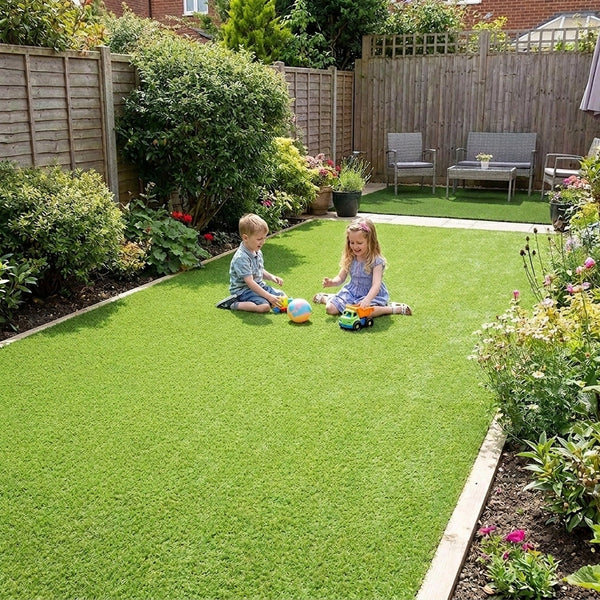
Yes. SBR rubber grass mats are non-toxic, contain no harmful plasticisers, and are safe for children and pets. The textured rubber surface provides grip that prevents slipping. Rubber does not splinter, crack, or create sharp edges under normal use.
Can rubber grass mats be used on slopes?
Yes, on gradients up to 15–20°. Use ground pins at regular intervals on slopes to prevent shifting. For steeper embankments, contact us for specific installation advice.
How long do rubber grass mats last?
10–15 years under normal outdoor use. UV-stabilised SBR rubber does not rot, warp, or degrade in wet UK conditions. Resistant to freeze-thaw damage. The main risks to lifespan are sharp point loads (stiletto heels, spade edges) and petroleum solvent contact — both uncommon in normal garden and driveway use.
Ready to order? Browse our complete rubber grass mat range — 38 products from lightweight event matting to vehicle-rated driveway panels. Free UK delivery, same-day dispatch before 2pm. Need cut-to-size or trade pricing? Contact our team.